

Key Takeaways
- A glasses prescription is not the same as a contact lens prescription; you need a dedicated contact lens fitting in Ottawa.
- Most people, including many with astigmatism or mild dry eyes, can successfully wear contact lenses.
- A first fitting at Rideau Optometric usually takes 60-90minutes, and most patients leave with trial lenses the same day.
- Rideau Optometric offers contact lens fittings at CF Rideau Centre and St. Laurent Shopping Centre; new patients are welcome.
- Most first-time contact lens wearers feel comfortable wearing contact lenses within about one week.
How to Get Contact Lenses and Book Your Fitting Today
If you are wondering how to get contact lenses in Ottawa, the answer is usually simple: book one appointment for an exam and contact lens fitting, then try trial lenses before your prescription is finalized. Many first time patients walk out wearing contacts the same day.
This guide covers everything you need to know before that appointment, from eligibility and prescriptions to what happens at each step of the fitting, which lenses your optometrist is likely to recommend, and what the process costs.
The process includes checking your vision, measuring your eyes, testing trial lenses, and booking a short follow-up visit. At Rideau Optometric, we offer contact lenses fittings at CF Rideau Centre and St. Laurent Shopping Centre and you can book your fitting online or by phone here.
Am I a Good Candidate for Contact Lenses?
Most Ottawa patients who currently wear glasses are good candidates for contact lenses, even if they have concerns about dry eyes, sports, screens, or astigmatism.
People in the following groups do well with contact lenses:
- Nearsighted (myopia) — the most common prescription corrected with contacts
- Farsighted (hyperopia) — contacts work just as effectively as glasses
- Astigmatism — toric lenses are specifically designed for this and widely available
- Single vision correction — for driving, screens, and everyday tasks
- Multifocal vision correction — for those who need different strength prescription at various distances
Children and teens can be candidates too. In Ontario, there is no fixed legal minimum age, and so long as the optometrist and parent/guardian determine that the child can wash hands reliably, follow instructions, and accept responsibility for daily eye and lens care, then a contact lens fitting can be done. Maturity matters more than age.
Contact lenses are less suitable in a smaller number of cases: severe dry eye disease, advanced corneal conditions without specialty lenses, active eye infections, or difficulty handling lenses safely. These situations are relatively uncommon, and only your optometrist can tell you which category you fall into.
The quickest way to find out if contacts are right for you is a fitting assessment at Rideau Optometric. Most candidates are confirmed at their first appointment.

Do I Need a New Contact Lens Prescription in Ottawa?
Yes, and this surprises many first-timers. A contact lens prescription is different from a glasses prescription because contacts sit directly on the eye. A standard eyeglass prescription is not sufficient for contact lenses; special measurements and examinations are necessary.
A contact lens prescription includes the power needed for vision correction, plus fitting details such as base curve, diameter, brand, material, and sometimes wearing schedule. You may also see abbreviations like BC for base curve and DIA for diameter. For toric lenses, the prescription may include cylinder and axis to correct astigmatism.
To obtain a contact lens prescription, you must first have a contact lens exam, which includes checking your vision and measuring your eyes for proper fit. In Ontario, a valid prescription requires an in-person exam and trial lens evaluation; it cannot be safely estimated online from glasses numbers alone.
If you recently had an eye exam at Rideau Optometric, usually within 12–24 months, your contact lens fitting can often be an add-on visit. Most contact lens prescriptions expire after one year, so regular check-ups are necessary to ensure your prescription is up to date and your lenses are still suitable for your eyes. Ordering with an expired prescription is unsafe and may not be filled by reputable sellers.
Not sure if your current prescription is recent enough? Call our clinics and our team will check before you book.
What to Expect at Your First Contact Lens Fitting at Rideau Optometric
A first contact lens fitting appointment usually takes 60-90 minutes. It is hands-on, relaxed, and designed to help you leave feeling confident.
At Rideau Optometric, your visit typically includes an eye exam if needed, corneal measurements, trial lenses, insertion and removal training, a take-home supply, and a follow-up.
Whether you are stopping in on a lunch break at Rideau Centre or coming in after work at St. Laurent, the process is the same: comfortable, step-by-step, and fully guided.
Here is exactly what happens:
Step 1 – Eye Exam
If you have not had a recent comprehensive eye exam, your visit begins with a full assessment of your vision and eye health. An eye exam for contact lenses typically includes checking the health of your eyes, measuring your vision, and assessing the fit of the lenses.
Your eye doctor may perform visual acuity testing, refraction, slit-lamp evaluation, retinal screening, and a dry eye check. This helps detect allergies, corneal changes, inflammation, or other concerns that could affect safe lens wear.
OHIP typically covers the medical eye exam portion for patients under 20 and 65+, while the contact lens fitting fee is separate. Learn more on Rideau Optometric’s eye exam service page.
Step 2 – Corneal Measurements
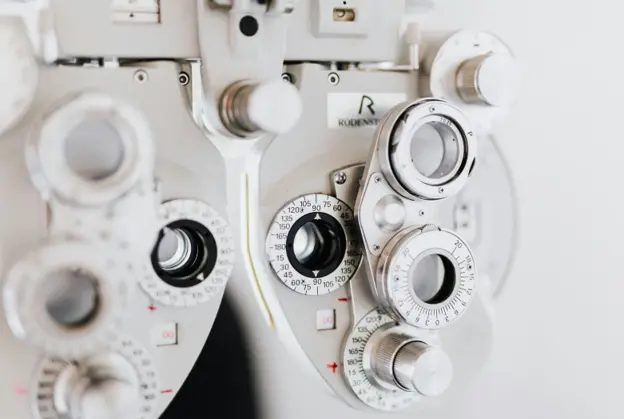
During a contact lens fitting, your eye care professional will measure the size and shape of your eyes to ensure a proper fit for the lenses. Keratometry or corneal topography helps measure the cornea’s curve.
These measurements help determine the base curve and diameter so the lens is not too tight or too loose. They also help your doctor choose standard spherical lenses, toric lenses, multifocal lenses, or specialty designs. The tests are quick, painless, and usually do not require drops.
Step 3 – Insertion and Removal Training
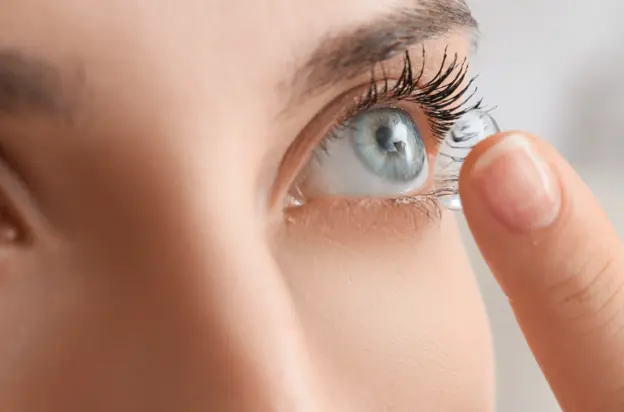
It is normal to feel nervous about touching your eyes. The Rideau Optometric team walks you through handwashing, handling the lens, checking orientation, insertion, and safe removal.
Proper hygiene and techniques for insertion and removal of lenses are essential for preventing eye infections and ensuring comfort. You will practice several times under supervision, and no one is rushed out before they are safe and reasonably confident. Most people get comfortable within 15–30 minutes of practice.
Step 4 – Trial Lenses
Trials with contact lenses are essential to evaluate comfort, vision clarity, and the fit on the cornea before finalizing the prescription. Based on your prescription, measurements, dryness, and lifestyle, the optometrist selects a trial from appropriate brands.
Examples may include Acuvue Oasys 1-Day, Acuvue Oasys bi-weekly, or a monthly lens like Air Optix plus Hydraglyde or Biofinity. You wear the trial lenses for about 10–15 minutes so they can settle. Then the optometrist checks centration, movement, comfort, and clarity at the slit lamp.
If the first trial is not ideal, your optometrist compares a second option before confirming the best fit.
Step 5 – Trial Period and Follow-Up
Most patients take home a short supply of trial lenses for 1–2 weeks. This lets you test contacts during commuting, screen work, sports, and Ottawa weather.
Your optometrist will give you a wear-time plan, often starting with a few hours and building gradually. A follow-up appointment approximately one to two weeks later checks corneal health, comfort, redness, dryness, and vision after regular wear. If everything looks good, your optometrist finalises and signs your contact lens prescription, which lists the brand, power, base curve, and other parameters.
From that point, you can reorder lenses directly through Rideau Optometric clinics or you can buy contact lenses online through our portal.
Ready to book? Schedule your fitting at our clinics at CF Rideau Centre or St. Laurent Shopping Centre.
Which Contact Lenses Will My Optometrist Recommend?
There is no single best pair of lenses for everyone. Your optometrist will choose lenses based on your correction, eye surface, dryness, budget, lifestyle, and whether you plan to wear contacts daily, weekly, or occasionally.
Contact lenses can be made of various materials including soft lenses, rigid gas permeable (RGP) lenses, and specialty designs such as toric and multifocal lenses. Health Canada regulates contact lenses as medical devices and all recommended lenses at Rideau Optometric are Health Canada–approved products from reputable manufacturers.
Daily Disposable Lenses
Daily disposables are worn once and thrown away. Daily disposables do not require cleaning solutions and are ideal for sensitive eyes, whereas reusable lenses must be cleaned and disinfected nightly.
They are a strong choice for first-time wearers, busy professionals, allergy sufferers, and part-time wearers. Examples include Acuvue Oasys 1-Day, Dailies Total 1, Precision 1, and MyDay Energys. They cost more per lens but simplify care and reduce some hygiene-related risks.
Monthly or Bi-Weekly Lenses
Monthly and bi-weekly lenses are cleaned and stored every night, then replaced on schedule. They can save money for full-time wearers but require solution, clean cases, and discipline.
Examples include Acuvue Oasys bi-weekly, Acuvue Vita monthly, Air Optix plus Hydraglyde monthly, and Biofinity Energys monthly. Do not stretch lenses beyond the approved schedule; it can increase irritation and infection risk.
Toric Lenses for Astigmatism
Astigmatism means the cornea or lens of the eye has uneven curvature. Toric contact lenses are designed to stay oriented so they can compensate for that uneven shape and provide stable vision.
Options include Acuvue Oasys for Astigmatism, Acuvue Oasys 1-Day for Astigmatism, MyDay Toric, and Biofinity Toric. Toric fitting may take a little extra fine-tuning, but most patients achieve good comfort and clarity.
Multifocal Lenses
Multifocal lenses help people in their 40s and beyond see distance and near tasks. They use different optical zones for street signs, computers, and phones.
Examples include Oasys Max Multifocal 1-Day and Biofinity Multifocal. Some adaptation is normal, and your doctor may change the power after real-world feedback.
Specialty Lenses
Some patients need specialty lenses such as scleral lenses or orthokeratology for complex prescriptions, irregular corneas, or myopia control. These require more advanced measurements and follow-up. Your optometrist will provide guidance if these are the right option.
| Lens type | Best for | Cleaning needed | Available at Rideau Optometric |
| Daily | First-timers, occasional wear, dry eyes, allergy sufferers | No | ✅ |
| Monthly | Daily full-time wearers | Yes | ✅ |
| Toric | Astigmatism | Depends | ✅ |
| Multifocal | Presbyopia 40+ | Depends | ✅ |
Glasses vs Contact Lenses: How to Decide
Many Ottawa patients use both glasses and contact lenses. The goal is not always to replace glasses, but to choose what works best for each day.
Contacts can help with winter fogging when entering warm buildings, sports at Lansdowne or local gyms, cycling near the Rideau Canal, and wearing sunglasses comfortably.
| Scenario | Glasses | Contacts |
| Cold weather | Can fog | No lens fog |
| Sports | Frames may move | Wider peripheral vision |
| Screen work | Less eye touching | May feel dry after long hours |
| Maintenance | Low daily effort | Requires hygiene routine |
| Overall cost | Depends on stability of prescription | Ongoing lens supply expenses |
Most contact lens wearers do not give up their glasses entirely; they use both, choosing based on the day and activity. Bring your questions to the appointment. Your optometrist at Rideau Optometric can talk through both options and help you decide what works best for your lifestyle.
What Does a Contact Lens Fitting Cost in Ottawa?
The contact lens fitting fee is separate from the standard exam fee because it covers extra measurements, trial lenses, training, and follow-up time. Standard single vision soft lens fittings usually cost less than toric or multifocal fittings; specialty lenses cost more.
Trial lenses are usually included in the fitting process at Rideau Optometric. OHIP does not cover contact lens fittings, but private insurance and vision insurance may cover part of the fitting and purchase. Some plans also allow a flexible spending account for eligible eye care expenses.
Purchasing contact lenses can be done either online or at an optometrist’s office, depending on personal preference and convenience. In-office optometrist shops provide convenience and guarantee the authenticity of contact lenses, while some online retailers can offer discounted prices. If you buy contact lenses using your vision insurance, it can help you reduce the cost of purchasing contact lenses, but it’s essential to check what is covered by your specific plan.
Contact lenses pose serious eye infection on injury risks if purchased from unregulated sources that bypass prescription verification. To get an accurate quote for your situation before you book, contact Rideau Optometric at either location, our team can outline what to expect based on your prescription type and wearing goals. You can also visit our portal to order contacts online from top brands.
What to Do Before and After Your First Fitting
A little preparation makes the visit smoother, and good habits protect long-term eye health.
Before your fitting
- Wear glasses on the day of your appointment, not contact lenses
- Bring your current glasses prescription if you have one
- Make a note of any symptoms you experience: dry eyes, seasonal allergies, heavy screen time
- Allow approximately 60 minutes for the full appointment
After your fitting
- Build up wear time gradually — start with two to three hours on day one
- Always wash your hands before inserting or removing lenses
- Never sleep in lenses unless specifically prescribed for overnight wear
- Replace on schedule — do not extend monthly lenses beyond their replacement date
- Keep your glasses as a backup — you will still need them
- Book your follow-up appointment and attend it — this visit confirms the lenses are fitting safely on your cornea
It is recommended to have an eye exam for contact lenses at least once a year to ensure that your vision and eye health are maintained.
If you experience ongoing discomfort, redness, or irritation with your lenses, read our guide on why contact lenses feel uncomfortable — and when to call your clinic.
Book Your Contact Lens Fitting in Ottawa
Your first contact lens fitting takes about an hour. Most people leave with trial lenses, a follow-up appointment already booked, and more confidence than they expected going in.
Rideau Optometric offers contact lens exams and fittings at two convenient Ottawa locations — CF Rideau Centre and St. Laurent Shopping Centre. Whether you are a first-timer or switching from another provider, new patients are always welcome.
Book your contact lens fitting today.
Frequently Asked Questions
Here are extra questions Ottawa patients commonly ask about first time contact lenses.
Can I get contact lenses if I only want to wear them for sports or special events?
Yes. Many people wear contacts only for hockey, running, gym workouts, weddings, or social events. Daily disposable lenses are often the easiest option because there is no cleaning or storage between uses.
Can I wear contact lenses if I have astigmatism?
Yes. Toric contact lenses are specifically designed to correct for astigmatism and are available in daily, bi-weekly, and monthly formats. Most astigmatism prescriptions can be corrected with standard toric lenses. Your optometrist will confirm during the fitting.
How long does a contact lens fitting take?
A first fitting at Rideau Optometric typically takes 60 to 90 minutes, including corneal measurements, trial lenses, and insertion and removal training. The follow-up visit is usually shorter — around 15 to 20 minutes.
Can I wear contact lenses if I have dry eyes?
Often yes, with the right lens. Silicone hydrogel lenses and daily disposables retain moisture more effectively and are frequently recommended for patients with mild to moderate dry eye. Your optometrist will assess your tear film during the fitting before recommending a lens type.
How old do you have to be to get contact lenses?
There is no fixed minimum age in Ontario. Suitability depends on the individual’s maturity and ability to maintain a hygiene and care routine consistently.
Where can I reorder contact lenses in Ottawa?
Once your contact lens prescription is finalised at Rideau Optometric, you can reorder your lenses directly through the clinic — in-clinic or via the online reorder portal — using your valid, current prescription.
Can I book a contact lens fitting at Rideau Optometric if I am not already a patient?
Yes — new patients are welcome at both the Rideau Centre and St. Laurent eye clinics. You do not need to be an existing patient to book a contact lens fitting or eye exam.
Leave A Comment
You must be logged in to post a comment.